Data Management Platform
Building Enterprise Infrastructure for Audience Intelligence
Overview
After Email Machine, I joined a fast-growing Data Management Platform company as Product Manager. The DMP served major Czech and Central European media agencies, providing real-time audience segmentation, cross-device tracking, and programmatic advertising infrastructure.
During my tenure (2016–2019), I led product strategy for a platform handling 500+ million user events daily, serving 50+ enterprise media agency clients, and processing billions of dollars in programmatic ad spend. The platform was the backbone enabling agencies to target audiences with precision and transparency.
The Problem: Data Intelligence Gap
"What We Solved"
By 2016, programmatic advertising was growing rapidly, but media agencies faced a critical gap: they had data, but couldn't leverage it effectively due to fragmented sources and slow, manual processes.
- Fragmented data sources (App, Web, CRM)
- Manual segmentation taking weeks
- Lack of unified customer view
- Growing privacy/compliance concerns
The opportunity was clear: build a platform that unifies data, enables real-time segmentation, and gives agencies programmatic control over their audience strategy.
Approach & Strategy
Three Core Pillars
1. Real-Time Data Ingestion & Unification
What it was: Event collection from all sources unified under a persistent user ID. Cross-device tracking matching users across touchpoints.
2. Self-Service Audience Segmentation
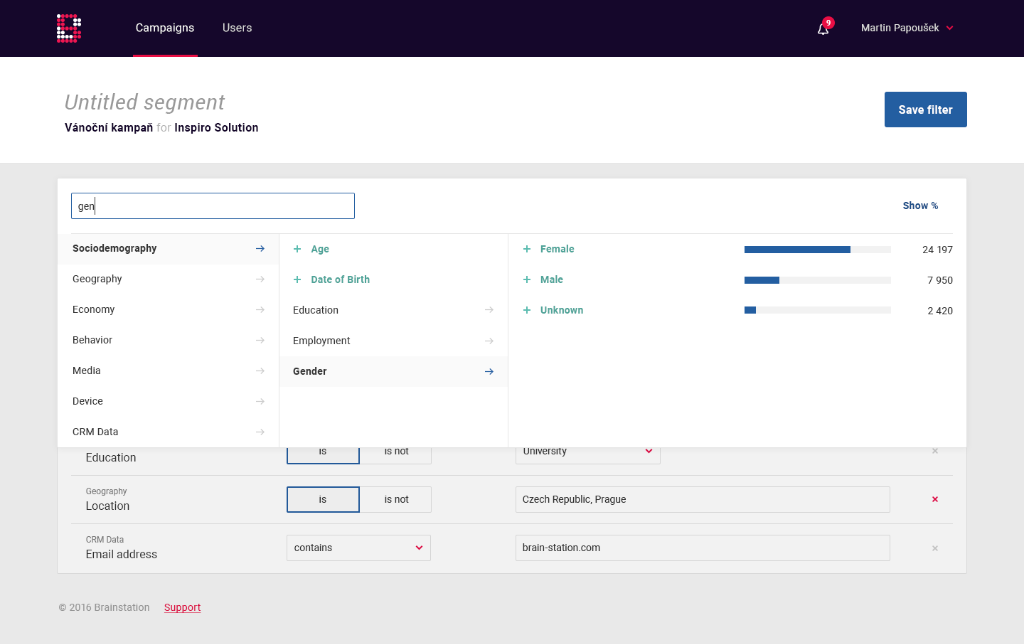
What it was: Visual UI for non-technical marketers to build complex rule-based segments. Real-time query computation.
3. Privacy-First Architecture
What it was: First-party cookie strategy, GDPR compliance, transparent data handling, and audit trails.
Platform Interface
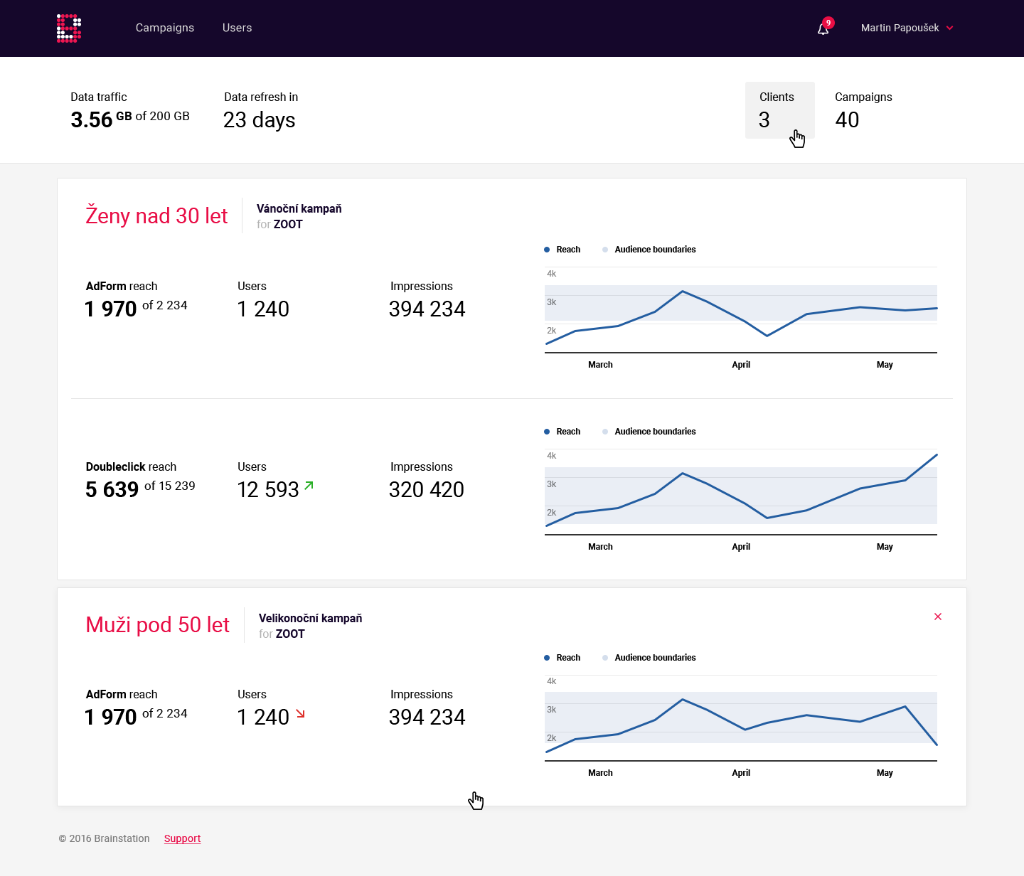
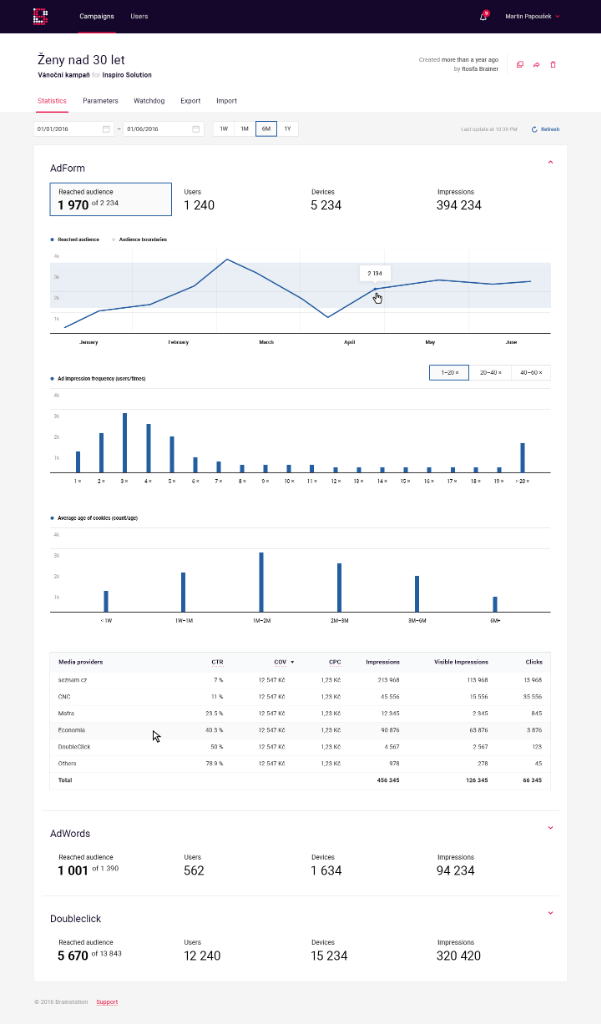
Complex data made accessible through intuitive design.
Technical Architecture
Execution: Timeline
Phase 1 (2016 – 2017): MVP & Pilots
Built core ingestion and basic UI. Partnered with 3-5 pilot agencies. Validated value of unification.
Phase 2 (2017 – 2018): Enterprise Scale
Cross-device tracking, GDPR compliance features. Processing grew to 200M+ daily events. 30+ agency clients.
Phase 3 (2019 – Present): Leadership
Advanced ML features (lookalikes). 500M+ events daily. Consolidated market leadership in Central Europe.
Key Metrics & Impact
500M+
Daily Events
50+
Enterprise Clients
99.95%
SLA Uptime
90%+
Retention
Lessons Learned
1. Data Quality is Everything
Garbage in = garbage out. We moved from fast ingestion to strict validation because fixing bad data is harder than preventing it.
2. Privacy is a Feature
GDPR was an opportunity, not a constraint. Building privacy-first accelerated trust with enterprise clients.
3. Complexity Hides in Platforms
Engineers think queries are simple; marketers don't. We had to invest heavily in UX to make the complex infrastructure usable.
Building infrastructure for non-technical users?
The DMP taught me that scale requires relentless focus on UX alongside powerful backend engineering.
Let's Talk